



An entity whose financial statements comply with IFRS Standards must make an explicit and unreserved statement of such compliance in the notes. An entity must not describe financial statements as complying with IFRS Standards unless they comply with all the requirements of the Standards. The application of IFRS Standards, with additional disclosure when necessary, is presumed to result in financial statements that achieve a fair presentation. IAS 1 also deals with going concern issues, offsetting and changes in presentation or classification. The Board also added the impairment requirements relating to the accounting for an entity’s expected credit losses on its financial assets and commitments to extend credit.
Give your business an edge with our leading industry insights.
Additionally, utilizing practical tools such as checklists and guidelines can streamline the application of IAS in daily operations. These resources help ensure compliance and can simplify the process of preparing financial statements by providing clear steps and requirements to follow. Major international policy regimes that manage and control the global economy include the United Nations, International Monetary Fund, World Trade Organization, the World Bank, and the Organization for Economic Co-operation and Development. Regional policy regimes, such as NAFTA and the European Union, also have great control and influence over the global economy. Policy regimes are characterized by their scope, purpose, organizational form, decision and allocation modes, and strength. For example, the last-in, first-out (LIFO) accounting method is allowed by GAAP but banned by IFRS.
Why global accounting standards?

When the standards switch occurs, the Certified Public Accountant (CPA) examination will have to be revised to include testing of items based on IFRS. Colleges and universities will need to train their professors and revise their curricula to begin to teach IFRS. Ultimately, when the United States fully adopts the IFRS, the United States will have to transition with patience and significant aid to private industry. As countries developed different cultures, languages, and social and economic traditions, they developed different accounting practices as well. In an increasingly globalized world, however, these differences are not optimal for the smooth functioning of international business. Investors had to study the minutiae as well, so they could develop methods to compare financial statements prepared under differing national accounting standards as they assessed investment opportunities.
Journal of International Accounting Research
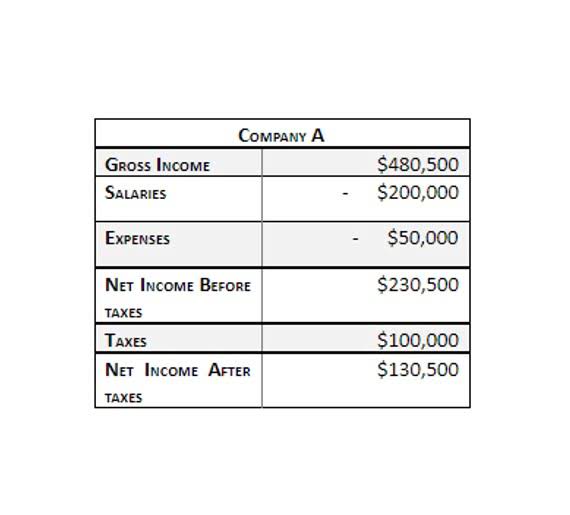
Usually, a profit and loss statement shows all of the activity for a quarter and is also likely broken down by month. It’s easier to discern patterns by looking at a profit and loss statement https://www.bookstime.com/ than at a balance sheet. A proper profit and loss statement shows all revenue a company has for the applicable period and then subtracts all money going out. Domestic accountants in the United States still use what some believe are outdated techniques and standards referred to as Generally Accepted Accounting Principles. The objective of the ISAR Honours is to raise awareness and facilitate dissemination of national and international best practices on sustainability and SDG reporting as an integral of annual reporting by companies.
Unconsolidated amendments
Ongoing education and training are vital for accounting professionals to stay updated with the latest standards, changes, and best practices in IAS. This continuous learning ensures https://toptipten.com/how-to-use-form-w-9-for-vendor-and-1099-compliance/ that individuals and organizations can adapt to evolving financial reporting requirements and maintain compliance in a dynamic business environment. IAS are the older set of standards that were gradually replaced by IFRS, which were introduced to further improve financial reporting practices.

The subsequent sections will delve into the specific standards under IAS, highlighting their implications for various aspects of financial reporting. Each standard will be examined in terms of its application, challenges, and best practices, ensuring that readers can grasp the practical aspects of compliance. Accurate and standardized financial information enables management to assess performance effectively and make informed choices. This clarity is vital for businesses looking to expand internationally, as it helps them understand market conditions and financial health in various regions. Davey Tree Expert Company, for example, which only does business in the United States and Canada, sees no benefits. Because the company is unlikely to ever list on any national exchange, the argument that unified standards would allow comparability of financials has no value (McCann, 2009).
Editorial Advisory and Review Board
- For instance, updates related to revenue recognition and lease accounting have been implemented to provide clearer guidance on reporting.
- Instead, the United States has the Financial Accounting Standards Board (FASB), which issues standards known as generally accepted accounting principles (GAAP).
- The modification affects refereed articles in the Journal of International Business Studies.
- He has more than 25 years of experience in the accounting profession and is described as the architect of the company’s digital audit strategy.
- This shift not only enhances productivity but also reduces the likelihood of human error in financial statements.
The objective of IFRS 16 is to report information that (a) faithfully represents lease transactions and (b) provides a basis for users of financial statements to assess the amount, timing and uncertainty of cash flows arising from leases. To meet that objective, a lessee should recognise assets and liabilities arising from a lease. This course is designed to benefit anyone engaged in or curious about international business, especially those interest in foreign currency exchange, international finance, or cross-border transactions. Future trends include emerging changes and updates to IAS to reflect new business practices and technologies.
Join over 3,400 global companies that choose Coursera for Business
Engaging with these guides can enhance understanding and ensure compliance with the latest accounting regulations. Utilizing these resources not only aids in navigating the complexities of IFRS but also fosters a culture of continuous learning and improvement in financial reporting practices. The IASB framework outlines the objectives of financial reporting, emphasizing the need for information that is useful to a wide range of users in making economic decisions.

- As globalization increases, companies face diverse accounting practices and regulations that can complicate financial reporting.
- Investors and analysts rely on consistent data to assess trends, risks, and opportunities within the market.
- Accounting harmonization refers to the reduction of difference in accounting practices among countries.
- Utilizing these resources not only aids in navigating the complexities of IFRS but also fosters a culture of continuous learning and improvement in financial reporting practices.
- Implementing International Accounting Standards (IAS) presents several challenges that organizations must navigate effectively.
Engaging with relevant training and resources can significantly enhance your understanding of IAS. Numerous organizations offer workshops, webinars, and online courses that cover the nuances of IAS, allowing professionals to stay updated on changes and best practices in financial reporting. When navigating International Accounting Standards (IAS), it is crucial to recognize that different industries may have unique accounting needs and challenges. For instance, sectors such as healthcare, construction, and technology often international accounting deal with specific regulations and financial reporting requirements that can diverge significantly from general standards.
B. Transparency
Additionally, the convergence of global accounting standards is expected to progress, with ongoing efforts to align IFRS with local GAAPs in various jurisdictions. This harmonization will facilitate cross-border transactions and improve comparability for investors, making it essential for accountants and financial professionals to stay abreast of these changes. IAS 2 addresses the accounting for inventories, providing guidance on how to determine the cost of inventory and when to recognize inventory as an expense. This standard is crucial for businesses that hold inventory, as it influences the valuation of assets and the determination of profit.